

Itaipú: how a power plant is slowly becoming a battery
Paraguay's electricity demand is growing fast. Why the Itaipú reservoir becomes more important, not less, as solar power expands.
Paraguay's electricity demand is growing fast. Why the Itaipú reservoir becomes more important, not less, as solar power expands.
"Enough energy for all time" and "we only need one turbine out of 18" are phrases you hear a lot in Paraguay – often with disbelief, right when the lights go out.
Interestingly, it once was true that Paraguay actually used only one of the 18 turbines – until 1998.
Paraguay's own energy and how much of it the country consumes
Available energy here means: all of Acaray’s generation plus 50 % of the annual generation of Itaipú and Yacyretá each.
Only a few years ago, Paraguay's domestic electricity consumption was barely more than a rounding error compared with production. Within just a few years, consumption has climbed to more than 65 % of the country's own share of generation.
Look around and you can see the change with your own eyes: in the late 1990s air conditioning was an absolute luxury; today it is standard for large parts of the population. Last year, on average, a new air conditioner was switched on in Paraguay every 64 seconds. Already today, air conditioners account for more than half of all electricity at peak load.
What has long been the new normal in Europe is slowly arriving in Paraguay: in the first half of 2026, 11 electric and hybrid vehicles were imported every day – a clear increase over 2025.
The global boom in artificial intelligence is not passing Paraguay by either. AI data centers use enormous amounts of electricity, and with its comparatively low energy prices, Paraguay is becoming a candidate location for new data centers.
The company HIVE already has a power demand of 300 MW at its data centers in Paraguay – almost exactly two turbines of the Yacyretá power plant. With further projects planned, data center demand is expected to double by 2028.
In Villeta, a new nitrogen fertilizer plant is under construction that will consume 145 MW around the clock from 2028. The same company plans another fertilizer plant in Alto Paraná with a consumption of more than 300 MW.
The additional demand from large projects such as fertilizer plants and data centers alone is higher than Paraguay's entire electricity consumption in the late 1990s.
Farmers know the feeling: you could have produced so much more, but the water just didn't allow it that year.
Between good and bad years, Itaipú's output varies by roughly 30 % (73 TWh in 2025 versus 97 TWh in 2018). The limiting factor for annual output is not the capacity of the turbines, but the rainfall north of the dam.
In normal operation, the reservoir level may vary by 1.5 meters, because the turbines are not simply run at full power, but according to demand. When, in the near future, part of the demand on sunny days is covered directly by solar systems, Itaipú automatically lets less water through its turbines, and the water level rises. That retained water can then be used at night, when the sun isn't shining. In other words: the turbines can already run at higher output at night if less power from the plant was needed during the day.
The capacity is enormous: a 1.5-meter rise across the whole reservoir equals about 2,000,000,000,000 liters of water. That corresponds roughly to the energy all of Paraguay consumes in seven days.
If Paraguay were supplied entirely by solar power during the day, the reservoir level would rise by about one centimeter per hour.
Itaipú is a power plant of superlatives in every respect. With just 1.5 m of level change, our plant has a storage capacity of about 600 GWh. For comparison: all battery storage in Europe combined adds up to just 61 GWh – a tenth of that.
So Itaipú does not become less important as solar power expands – it becomes more important. But today it's no longer just the amount of energy generated that counts, but increasingly the moment it is available. With growing solar capacity, the reservoir is turning from a water reserve into the time storage of Paraguay's power system.
For decades, Itaipú impressed the world above all with its sheer size. In the future, its greatest value may lie in something far less spectacular: 1.5 meters of water level.
One turbine out of 18 has long stopped being enough.
But maybe 1.5 meters will be.
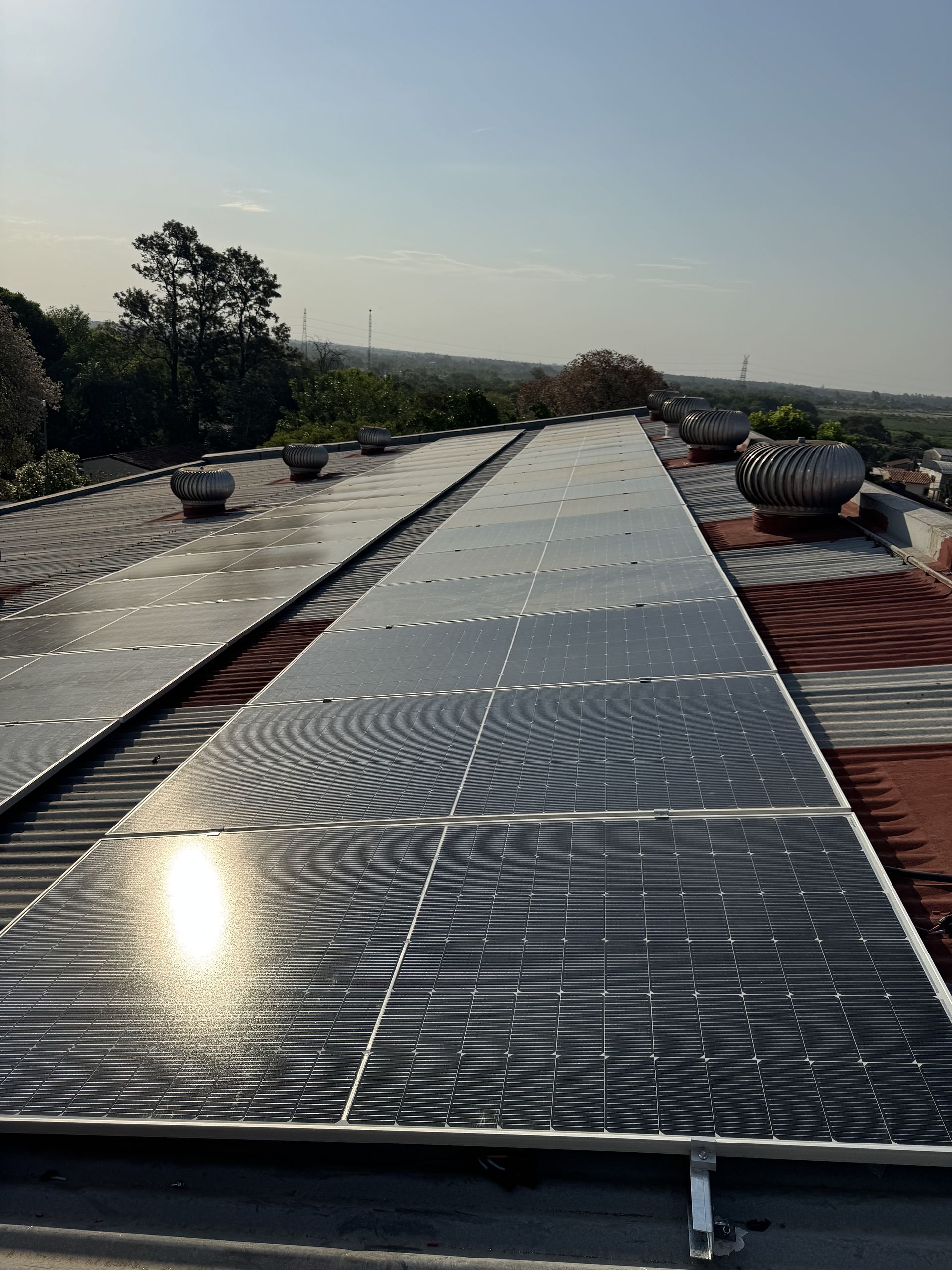
Ready to harness the power of the sun? Let's take the first step towards a greener future. Reach out to us today to explore solar solutions tailored to your needs.