

Avoid your own transformer – solar and battery storage as an alternative
Requesting more power from ANDE quickly leads to your own transformer. With solar, batteries and an inverter that limits grid draw, a smaller connection is often enough.
Requesting more power from ANDE quickly leads to your own transformer. With solar, batteries and an inverter that limits grid draw, a smaller connection is often enough.
New air conditioners, a cold room, a workshop, an electric car – and suddenly the existing ANDE connection is no longer enough. Anyone who then applies for a higher connection often gets an unwelcome answer: above a certain size, the connection is no longer low voltage but medium voltage. That usually means your own transformer on the street, paid for by the customer.
Yet hardly any house or business needs its full power all day. Usually it is short peaks: all machines start in the morning, all air conditioners run at once in the afternoon. A battery bank can cover exactly those peaks.
We calculate free of charge whether storage is enough in your case.
Ask via WhatsApp → Contact form
What counts is ANDE's current tariff schedule (Pliego de Tarifas Nº 21). It defines how requested power is determined in low voltage: by the main breaker, the llave limitadora or llave termomagnética of the installation. Connection fees and deposit are based on it as well.
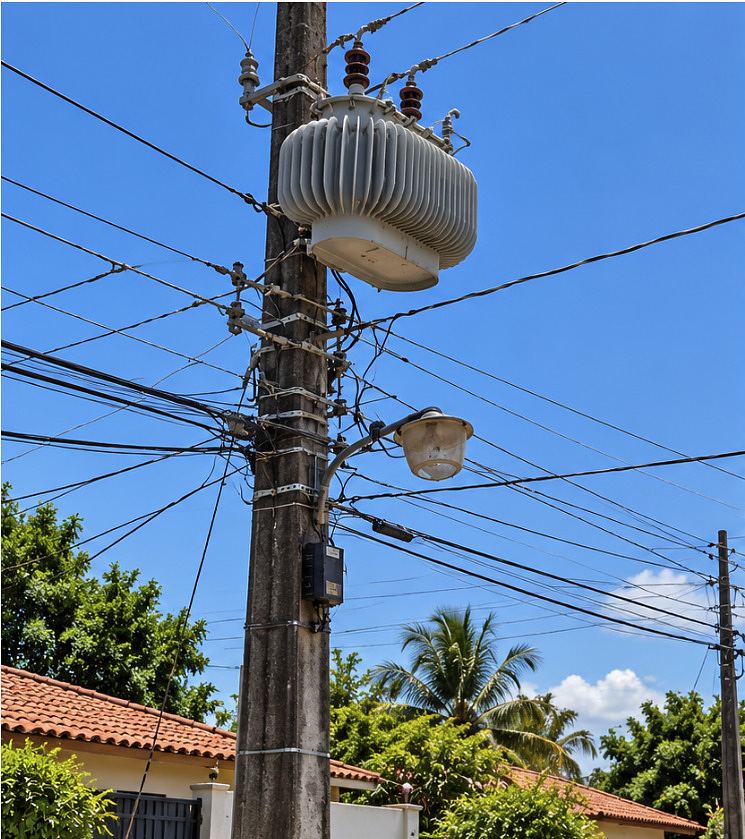
For larger connections, ANDE also checks whether the grid and the existing street transformer can supply the power. Several meters on the same property are considered together.
So what matters is not how much power your appliances add up to, but how large the main breaker has to be. And it only needs to be as large as the current you actually draw from the grid.
In practice, an ANDE-registered electrician (electricista matriculado) sets the breaker size in the load declaration (declaración de carga). What is declared is the load, not every single appliance. With a system that limits grid draw, the breaker is sized to that limit – we coordinate this with your electrician.
A hybrid inverter works in parallel with the grid: using current sensors, it measures how much comes from the grid and supplies your loads from three sources at once:
The main breaker remains the hard limit: it physically caps what can come from the grid. The inverter makes sure that limit is not reached in daily operation and the breaker does not trip.
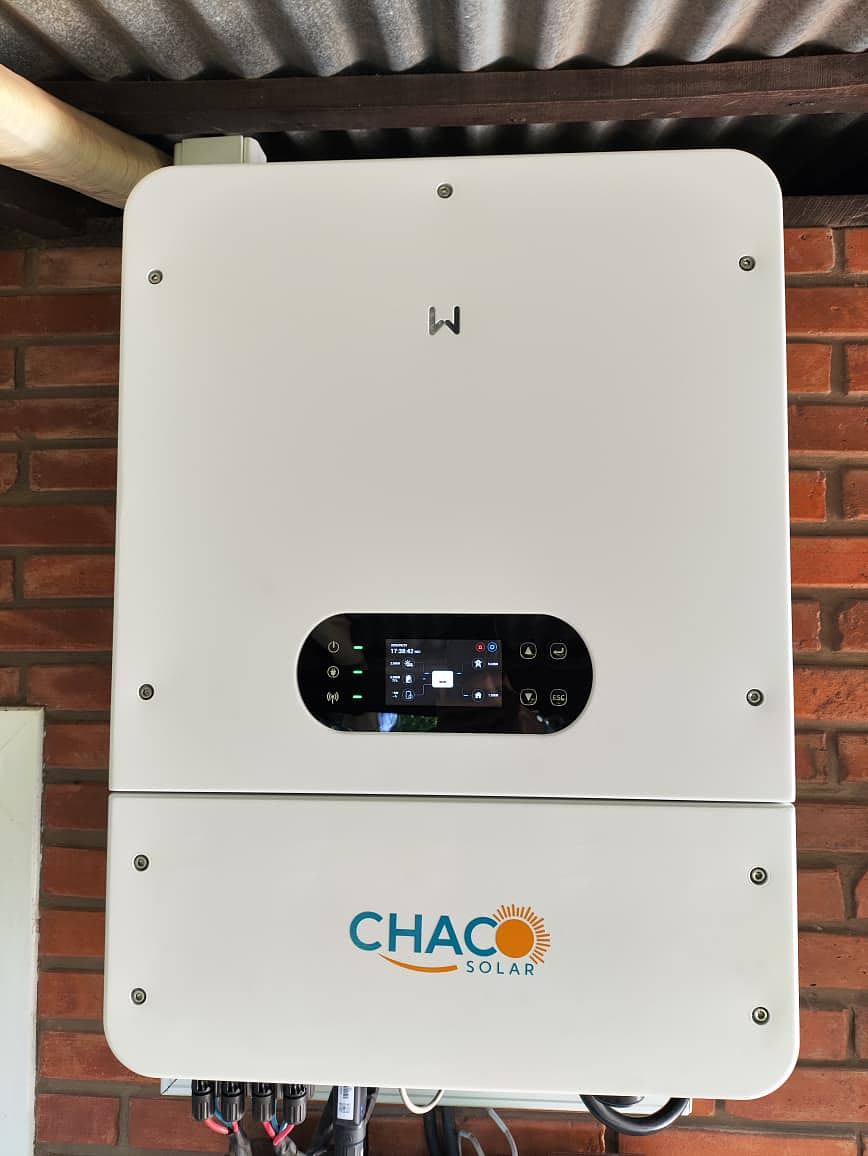
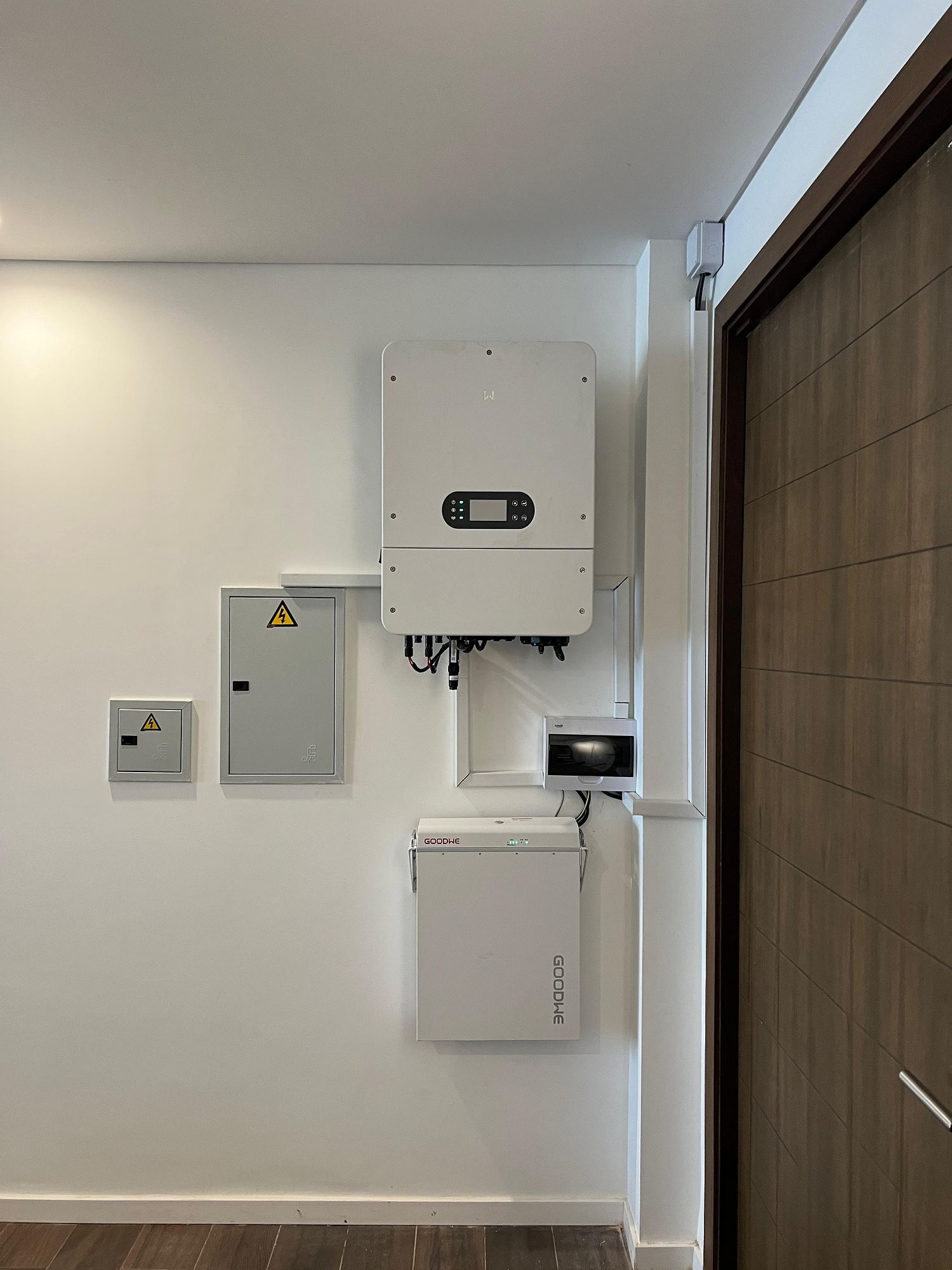
A business has peaks of up to 75 kW – too much for low voltage. With storage, grid draw is limited to 40 kW, below the 41.58 kW.
During the day, the solar array further reduces what the battery has to supply. The example shows the principle, not your system – sizing depends on your load profile.
On one side are the transformer, the medium-voltage connection and the connection works. On the other, the solar system, battery storage and load management. The difference: a transformer only provides power. Solar and storage also lower the electricity bill every month and bridge power cuts.
To be fair, battery losses, ageing and a later replacement belong in the calculation too. And for very large consumers, medium voltage can still be the better choice thanks to lower tariffs. That is why we do not quote a blanket saving – we calculate both options for your site.
According to ANDE's tariff schedule, anything above 66 kW is connected in medium voltage. Between 41.58 and 66 kW, ANDE decides based on the technical conditions on site. There is no fixed rule of "transformer required from 30 kW". For larger connections, however, ANDE requires a prior consultation (consulta previa) in which it checks the local grid and transformer.
Yes. Often the existing connection is enough for new loads if solar and storage cover the peaks. Then no increase is needed at all.
With a battery, yes. Solar panels alone do not help at night or under heavy clouds – the extra power then comes from the battery.
Then only the grid connection's power is available. That is why we define which loads are switched off automatically in that case, so the main breaker does not trip.
Many businesses use a generator to cover what the connection cannot. Storage can take over that job for the peaks: no noise, no diesel, no start-up. The generator can stay as a backup for long outages, often much smaller.
No. Zero export prevents power flowing back into the grid. Peak shaving limits how much power you draw from the grid. They can be combined, but they are two different functions.
We compare for you, free of charge: transformer or solar with storage. Send us via WhatsApp:
If needed, we measure the load profile on site. From that we prepare a concrete comparison for your site.
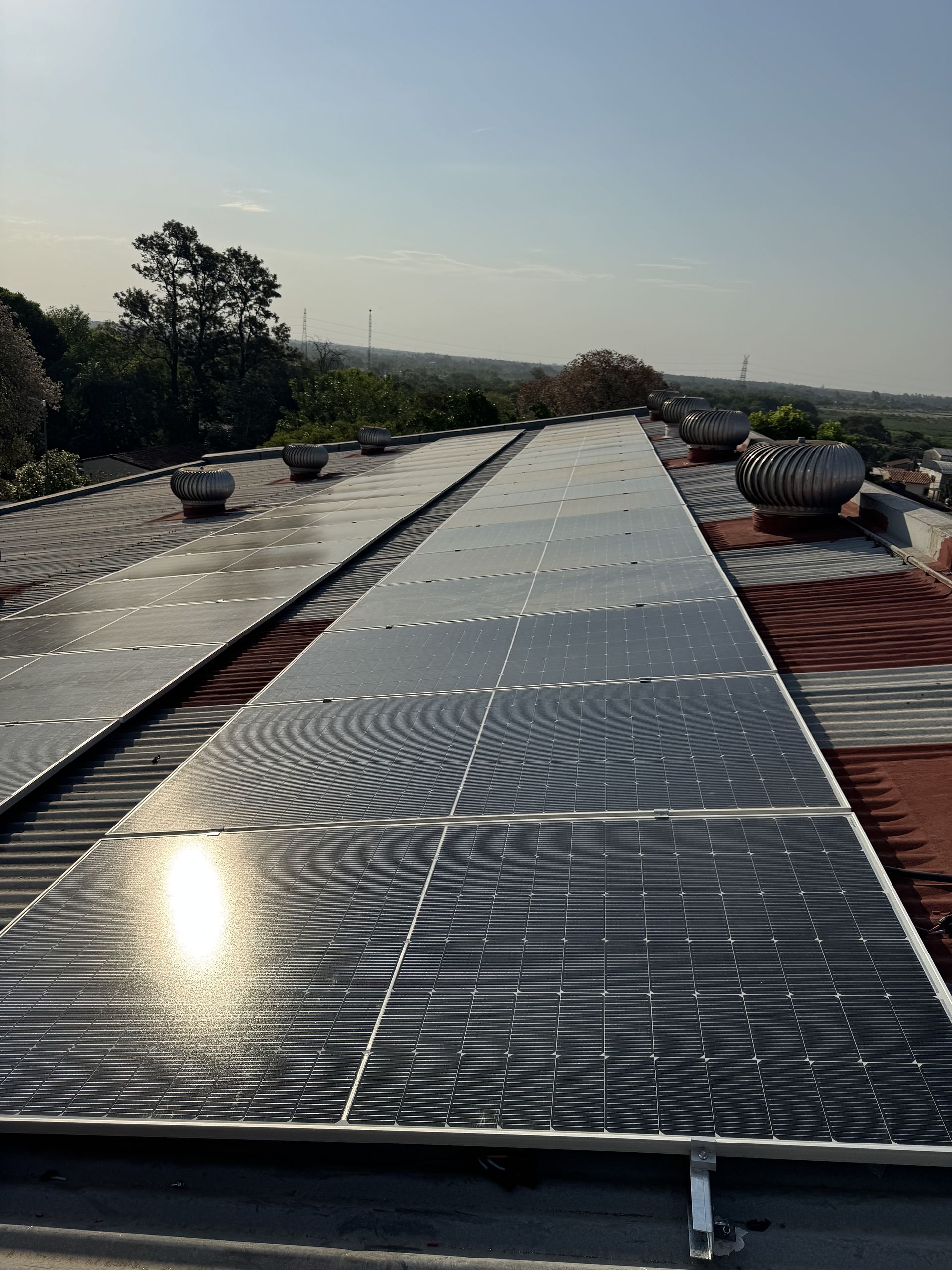
Ready to harness the power of the sun? Let's take the first step towards a greener future. Reach out to us today to explore solar solutions tailored to your needs.